Baseball Tips: Correcting the Most Common Hitting Problems at Any Level of Play!
By Guest Author: Larry Cicchiello
If you have what is referred to as a "quick hip," please forgive my bluntness but you will have no chance of being a successful baseball hitter. Only on an inside pitch, can you get away with opening the front hip a little bit early. A "quick hip" is when the front hip opens a fraction of a second early. It is a common hitting problem and a very serious one for many hitters at all levels of play. One of the most important baseball tips on hitting is to remember that the swing itself should force the front hip open. If the hip is a fraction of a second too quick, it forces your front side to open too early and this is a recipe for disaster for a baseball player at any level of play.
Three Major Problems Occur if You Have A Quick Hip:
1. You will not see the ball well. Your head will go along for the ride with your "quick hip" and you will be looking at the ball out of the corner of your eyes when the moment of truth arrives and you attempt to actually hit the ball.
2. Your power will be lost. You will be leaning toward third base if you are a right-handed hitter or toward first base if you are a left-handed hitter. That is not where the hitting is taking place. The hitting is taking place in front of you, not to the left or right of you.
3. Your plate coverage will be poor. The only pitch you'll be able to hit with any success at all is the inside pitch and low and away pitches will cause many baseball hitting problems for you.
I wonder how much young players who are struggling at the plate would improve considerably if they made this fairly simple adjustment at the plate.
Keeping the front hip and the entire front of your body closed is one of the most important baseball tips on hitting. How common is the baseball hitting problem of having a "quick hip"? You can check it out for yourself. When watching a game live in person or on TV at any level of play, observe the weaker hitters. (The ones who are batting .220, .230 or .240.) Keep an eye on their front hip. In almost all cases, it will be opening too early.
On the other side of the coin, you can also check out the better hitters. They will be keeping their front hip closed!
Larry is the successful author of several very user friendly eBooks and CD's covering 320 topics on playing or coaching excellent baseball. ANY player, coach or parent who wants to help their child will be fully equipped! Check out some FREE baseball tips on hitting and FREE baseball pitching tips at LarryBaseball.com.
Article Source: http://EzineArticles.com/?expert=Larry_Cicchiello
Article Source: http://EzineArticles.com/3186147
-------------------------
Baseball2u.com - Hit2win.com - Advanced Skills Tee

Welcome to the YOUTH BASEBALL COACHING CLINIC. Our site features free articles, tips, and drills related to the successful coaching of youth baseball teams. Our information is useful to Little League, Dixie Youth, Babe Ruth, and Cal Ripkin baseball coaches.

Showing posts with label baseball batting tips. Show all posts
Showing posts with label baseball batting tips. Show all posts
Friday, July 26, 2013

Tuesday, October 11, 2011
Correct Batting Practice Methods For Little League Baseball Teams
Correct Batting Practice Methods For Little League Baseball Teams
By guest author: Marty Schupak
In my eighteen years of coaching youth baseball, I am always looking for the most efficient practice methods for every aspect of baseball. It took me only a few years to realize that most youth baseball coaches and myself were running batting practice, not incorrectly, but not efficiently. From what I have seen with the typical batting practice, a coach will pitch a predetermined number of balls for each batter with the fielders fielding the hit balls and throwing them to first base. Usually the coach will yell something like "run the last one out", and the batter does just that. If the ball is an infield hit, they try to throw him out at first. If it is hit into the outfield, he usually runs until he is thrown out. This is all well and good intentioned, but it is wasting valuable time when a coach wants to run an efficient practice.
Here is the most efficient way of running a batting practice that I've come up with. First of all, let me say this. Batting practice is just what it is, batting practice. Batting practice is not fielding practice or base running practice. So all youth coaches and parents should really define what a youth batting practice is and what they want to get out of it.
Most of my youth practices do not run more than one hour. Every minute of wasted time will affect all other aspects and time of any other drills or techniques I want to accomplish. The first thing a coach needs to have is an over abundance of baseballs. The league will provide baseballs but I always make sure I purchase a few dozen extras. I try to work with three-dozen and keep an extra dozen in my trunk. And don't think I'm not frugal accounting for every baseball at the end of practice. I try to make sure we find each one, and after practice, we comb the field to make sure we got them all. Usually we find extras and end up with more than what we started with.
Now, here is the actual logistics and set up that I do about 95% of the time I run batting practice. I'm a big proponent of bunting. I set up two cones on the third base line, about six feet apart, approximately where the bunt is suppose to go. I set up two empty buckets, one about three feet behind second base and the other one at the far base of the mound toward second. I have another bucket with the baseballs on the mound easily accessible to me. Now, this is a key. As a youth coach who wants a well-run practice and a lot of repetitions for the kids, I move up almost to the front base of the mound to pitch. I do this mainly so I can throw strikes consistently. For safety purposes, an "L" screen would be required from a shorter distance for safety. If your league doesn't have any, make them get them.
I have the first person up at bat with the 2nd and 3rd player ready to go. I have the 3rd hitter (or double on deck hitter) on the outside of the screen hitting balls on a batting tee using pickle balls (plastic) or wiffle balls with another parent feeding the balls on the tee. I always have the number 2, or on deck hitter, ready to hit.
The batter bunts the first to pitches. For each successful bunt, the player receives an extra swing. I usually give a player five swings besides his two bunts. So if a player lays one bunt between the cones, he get six regular swings. If he lays both bunts between the cones, he gets seven swings (the maximum per hitter). Now, there are certain things that have to happen to make this work. Remember there are two buckets strategically located. After the bunts, when the hitter swings away, wherever the ball is hit, the fielder tosses it into the bucket closet to him. If it is hit to the outfield, he will throw the ball as close to the bucket behind second base. If he hits it to the infield, the fielder will toss it to the bucket behind the pitcher's mound. Reinforce to the players that they must toss to the bucket on one or two bounces or they will tend to play basketball with the baseball and bucket.
Now the point here is that the fielders do not make a play to first and the hitter does not run the last one out. We get more repetitions in a short period of time. The players are always facing the hitter. One might ask, isn't this boring for most of the players in the field? Well, not really. Because of the amount of balls hit in a short period of time, the ball is usually hit all over the place. And the coach throwing batting practice will keep one or two extra balls in his glove and is ready to pitch the next ball right away. When out of baseballs, have the players in the infield hustle to gather up the balls, combine buckets, and we're ready to go again. This works great!
Batting practice is a favorite of any baseball player at almost every level. Do not deny batting practice at any practice. And always look for the most efficient, safest procedure to help enhance your whole practice.
http://www.YouthSportsClub.com
http://www.VideosForCoaches.com
Marty Schupak has coached youth baseball for 18 years and is the video creator of "The 59 Minute Baseball Practice", "Backyard Baseball Drills", "Winning Baseball Strategies", "Hitting Drills & Techniques" and author of the popular book, "Youth Baseball Drills". He is a principle for Videos For Coaches and is also President of the Youth Sports Club, a group dedicated to making sports practices and games more enjoyable for kids.
Article Source: http://EzineArticles.com/?expert=Marty_Schupak
==========================
Thanks to our sponsors:
www.BatAction.com

---BatAction Machine at CoachesBest.com
---BatActionMachine on Ebay.com
---BatAction Machine Video Clips
---BatAction Trainer - 15 Reasons Why You Must Own This Machine
---Message to Parents From Coach Nick
---If you are looking for BatAction Replacement Balls or Power Bands Click Here
By guest author: Marty Schupak
In my eighteen years of coaching youth baseball, I am always looking for the most efficient practice methods for every aspect of baseball. It took me only a few years to realize that most youth baseball coaches and myself were running batting practice, not incorrectly, but not efficiently. From what I have seen with the typical batting practice, a coach will pitch a predetermined number of balls for each batter with the fielders fielding the hit balls and throwing them to first base. Usually the coach will yell something like "run the last one out", and the batter does just that. If the ball is an infield hit, they try to throw him out at first. If it is hit into the outfield, he usually runs until he is thrown out. This is all well and good intentioned, but it is wasting valuable time when a coach wants to run an efficient practice.
Here is the most efficient way of running a batting practice that I've come up with. First of all, let me say this. Batting practice is just what it is, batting practice. Batting practice is not fielding practice or base running practice. So all youth coaches and parents should really define what a youth batting practice is and what they want to get out of it.
Most of my youth practices do not run more than one hour. Every minute of wasted time will affect all other aspects and time of any other drills or techniques I want to accomplish. The first thing a coach needs to have is an over abundance of baseballs. The league will provide baseballs but I always make sure I purchase a few dozen extras. I try to work with three-dozen and keep an extra dozen in my trunk. And don't think I'm not frugal accounting for every baseball at the end of practice. I try to make sure we find each one, and after practice, we comb the field to make sure we got them all. Usually we find extras and end up with more than what we started with.
Now, here is the actual logistics and set up that I do about 95% of the time I run batting practice. I'm a big proponent of bunting. I set up two cones on the third base line, about six feet apart, approximately where the bunt is suppose to go. I set up two empty buckets, one about three feet behind second base and the other one at the far base of the mound toward second. I have another bucket with the baseballs on the mound easily accessible to me. Now, this is a key. As a youth coach who wants a well-run practice and a lot of repetitions for the kids, I move up almost to the front base of the mound to pitch. I do this mainly so I can throw strikes consistently. For safety purposes, an "L" screen would be required from a shorter distance for safety. If your league doesn't have any, make them get them.
I have the first person up at bat with the 2nd and 3rd player ready to go. I have the 3rd hitter (or double on deck hitter) on the outside of the screen hitting balls on a batting tee using pickle balls (plastic) or wiffle balls with another parent feeding the balls on the tee. I always have the number 2, or on deck hitter, ready to hit.
The batter bunts the first to pitches. For each successful bunt, the player receives an extra swing. I usually give a player five swings besides his two bunts. So if a player lays one bunt between the cones, he get six regular swings. If he lays both bunts between the cones, he gets seven swings (the maximum per hitter). Now, there are certain things that have to happen to make this work. Remember there are two buckets strategically located. After the bunts, when the hitter swings away, wherever the ball is hit, the fielder tosses it into the bucket closet to him. If it is hit to the outfield, he will throw the ball as close to the bucket behind second base. If he hits it to the infield, the fielder will toss it to the bucket behind the pitcher's mound. Reinforce to the players that they must toss to the bucket on one or two bounces or they will tend to play basketball with the baseball and bucket.
Now the point here is that the fielders do not make a play to first and the hitter does not run the last one out. We get more repetitions in a short period of time. The players are always facing the hitter. One might ask, isn't this boring for most of the players in the field? Well, not really. Because of the amount of balls hit in a short period of time, the ball is usually hit all over the place. And the coach throwing batting practice will keep one or two extra balls in his glove and is ready to pitch the next ball right away. When out of baseballs, have the players in the infield hustle to gather up the balls, combine buckets, and we're ready to go again. This works great!
Batting practice is a favorite of any baseball player at almost every level. Do not deny batting practice at any practice. And always look for the most efficient, safest procedure to help enhance your whole practice.
http://www.YouthSportsClub.com
http://www.VideosForCoaches.com
Marty Schupak has coached youth baseball for 18 years and is the video creator of "The 59 Minute Baseball Practice", "Backyard Baseball Drills", "Winning Baseball Strategies", "Hitting Drills & Techniques" and author of the popular book, "Youth Baseball Drills". He is a principle for Videos For Coaches and is also President of the Youth Sports Club, a group dedicated to making sports practices and games more enjoyable for kids.
Article Source: http://EzineArticles.com/?expert=Marty_Schupak
==========================
Thanks to our sponsors:
www.BatAction.com

---BatAction Machine at CoachesBest.com
---BatActionMachine on Ebay.com
---BatAction Machine Video Clips
---BatAction Trainer - 15 Reasons Why You Must Own This Machine
---Message to Parents From Coach Nick
---If you are looking for BatAction Replacement Balls or Power Bands Click Here
Tuesday, August 16, 2011
How To Properly Grip A Baseball Bat
How to Avoid Bat Drag - How The Best Hitters in Baseball Use Their Hands
In order to swing the bat effectively and produce bat speed you need to learn to torque the handle of the bat. This video explains the hand mechanics which 95% of the best hitters in MLB use.
How To Properly Grip A Baseball Bat
UNC Assistant Baseball Coach Chad Holbrook demonstrates how to get the maximum power from your grip
=====================
Baseball2u.com – The Ultimate Baseball Coaching & Training Store
Baseball2u.com Store Categories
Youth Trainers
Advanced Baseball Trainers
Baseball Training Bats
Baseball Pitching Trainers
Baseball Defensive Trainers
Batting Cages
Pitching Machines
Jugs Pitching Machines
Jugs Baseball Training Packages
BATA Pitching Machines
Heater Pitching Machines
Cimarron Pitching Machines
Game & Practice Baseballs
Baseball Screens & Nets
Baseball Portable Pitching Mounds
Baseball DVDs
Baseball Hitting DVDs
Baseball Pitching DVDs
Baseball Drills Videos & Books
Baseball Coach Strategy Books & DVDs
Coaching Youth Baseball DVDs & Books
Coach Marty Schupak's Youth DVD's
In order to swing the bat effectively and produce bat speed you need to learn to torque the handle of the bat. This video explains the hand mechanics which 95% of the best hitters in MLB use.
How To Properly Grip A Baseball Bat
UNC Assistant Baseball Coach Chad Holbrook demonstrates how to get the maximum power from your grip
=====================
Baseball2u.com – The Ultimate Baseball Coaching & Training Store
Baseball2u.com Store Categories
Youth Trainers
Advanced Baseball Trainers
Baseball Training Bats
Baseball Pitching Trainers
Baseball Defensive Trainers
Batting Cages
Pitching Machines
Jugs Pitching Machines
Jugs Baseball Training Packages
BATA Pitching Machines
Heater Pitching Machines
Cimarron Pitching Machines
Game & Practice Baseballs
Baseball Screens & Nets
Baseball Portable Pitching Mounds
Baseball DVDs
Baseball Hitting DVDs
Baseball Pitching DVDs
Baseball Drills Videos & Books
Baseball Coach Strategy Books & DVDs
Coaching Youth Baseball DVDs & Books
Coach Marty Schupak's Youth DVD's
Monday, November 8, 2010
Baseball Tips for Hitting: What Every Player Needs to Know

Baseball Tips for Hitting: What Every Player Needs to Know
By Jeffery A Wise
Every great ball player knows you can't step up the plate unprepared. You've got to be focused, mentally and physically ready for any situation. Every at bat is different and you will never experience the same situation twice. But, there are some baseball tips you must know that will help with whatever circumstance you face.
To be the best hitter possible, you have to work hard. It requires more than just skill. You need to discipline yourself and focus on your goals. For hitting the ball better, here are steps you should take to make it happen:
Find at least two hitting drills that challenge you and practice them regularly.
On or off season, you should be participating in some physical conditioning to keep your body strong and in good shape.
At each live batting practice, hit at least 20 balls. Hit to all areas of the field and even bunt a few balls.
Study professional games and watch the hitters and pitchers. Follow those who have good mechanics, good work ethic and a good attitude.
Take care of your body by eating and drinking right.
None of these steps are incredibly hard and with commitment and endurance, they will make you the hitter you want to be. Growing up, I played with guys who are now in the MLB. They stood out because they worked so hard to be the best. And now you can see why they are where they are. Their hard work paid off.
You get out of hitting what you put into it. And don't be shy to ask for help from a parent, coach or teammate. Every great player has had help. Support from others, hard work and preparation will get you where you want to be.
Jeffery A Wise invites you to learn the proven system of baseball hitting so that you can learn how to hit a baseball better. Start learning today with our blog about hitting the baseball, watching our videos and following us on Twitter and Facebook.
Article Source: http://EzineArticles.com/?expert=Jeffery_A_Wise
=================
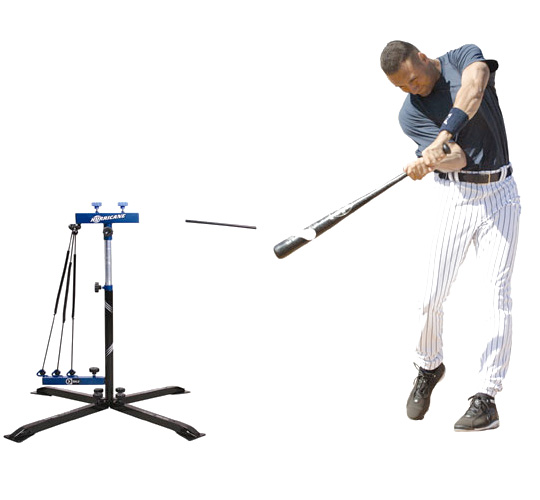
Check out the Hurricane Hitting Machine: Derek Jeter Series:
Hurricane Hitting Machine - Homepage
15 Reasons To Buy a Hurricane Trainer
6 Questions Often Asked By Customers
Message to Parents From Coach Nick
Examples of Hurricane Hitting Drills
The Highly Acclaimed 20-Minute Hurricane Batting Practice Workout
Hurricane Batting Machine Video Clips
Derek Jeter Hurricane Hitting Machine

The Coaches Best Baseball Store has a great selection of 1400 Baseball Products. Check out the BatAction Hitting Machine baseball pitching simulator. This high speed training machine is 100% Guaranteed to raise Batting Averages and has a full year warranty.
Saturday, October 30, 2010
Baseball Hitting Tips for Motivation

Baseball Hitting Tips for Motivation
By Jeffery A Wise
There are countless stories of very successful people who were at one time told they wouldn't amount to anything. They were destined to fail in the eyes of the world, but the world was proved wrong. One such case was Babe Ruth.
Another, perhaps less extreme case, is Oakland A's Dallas Braden. He pitched a perfect game, probably the hardest thing to do in all sports, but he was never considered a prospect for great pitching. I bet he is now, though.
Examples like these should encourage and motivate you. One of the most important baseball hitting tips to remember is that you should never give up. Be determined and confident each time you go up to bat. Even if you are in a bad slump, clear your mind and be ready to attack the ball each time at bat. Forget about your last strike out and remember that you're not finished.
Even the greatest hitters in the world only get a hit one out of three or four times. Be patient and know that you can get the job done.
Believe in yourself, even if no one else does. If you are like Braden and not highly regarded by many, remember that your destiny is not sealed. You can make a difference with hard work, motivation and belief in yourself.
Work hard at practice every day and when you get your opportunity you will show them how dedicated you are. Hopefully stories like Braden's and Babe Ruth's will push you in the right direction to accomplishing your baseball goals.
Jeffery A Wise invites you to learn the proven system of baseball hitting tips so that you can learn how to hit a baseball better. Start learning today by following our baseball hitting Twitter account, reading our information and watching our videos.
Article Source: http://EzineArticles.com/?expert=Jeffery_A_Wise
================
===Advertisement from our sponsor:=====
Baseball2u.com/CoachesBest.com is the ultimate online baseball training and coaching store. With over 1400 products organized into categories Baseball2u.com makes finding that baseball training product easy and simple. Order securely online or by phone. Baseball2u.com is a fully licensed company and has a full time staff available from 8:00 to 5:00 CST. Their toll free customer service number is 1-877-431-4487.

The Categories they have are: BatAction Hitting Machines, Hurricane Hitting Machines, Batting Cages, Pitching Machines, Jugs Equipment, Game and Practice Baseballs, Protective Practice Screens and Nets, Portable Pitching Mounds, Baseball DVDs & Books, Clearance Items on Sales, NEDCO Bataction Replacement Parts, Baseball Training Equipment, Youth Baseball Training Equipment, Training Bats, Pitching & Throwing Trainers, Defensive Trainers, SKLZ Hurricane Replacement Parts and Much Much More! Visit Baseball2U.com today!
Thursday, July 22, 2010
How to Improve Batting Average and Get Full Contact When Hitting a Baseball
How to Improve Batting Average and Get Full Contact When Hitting a Baseball
By Guest Author Joe Brockoff
Young or old, new to the game or not, no one likes to strike out. So, when I see players struggling with making contact while at bat I simply ask, "How do you feel at the plate?" Most often, the response is the same, "Coach, I'm not seeing the ball."
My response? Use your imagination. Throughout my career in baseball, I've developed hitting drills that convert complex techniques into easy-to-learn applications using imagery. My system is practically fool proof, requiring only a player's willingness to imagine and a desire to succeed.
So how can we use imagery to help batters "see the ball?"
The Problem: "I can't see the ball."
We hear players say it all the time, especially after striking out. Following the ball from pitch to plate is a serious challenge for many hitters, yet we know that the ability to read the pitch and make proper judgment is as important as anything in becoming an efficient hitter. This also decreases rushing and increases confidence.
The Super 8 Hitting System Solution: "Visualize the Target"
Let's imagine that the ball is a target. If we want to hit the bull's eye on a target, then it is necessary to aim for the bull's eye. If the outer ring will give us 10 points, and the bull's eye will give us 100 points, what part do we focus on? The bull's eye, of course. It gives us the highest reward.
With this in mind, let's do a few "making connections" hitting drills, using either regular batting practice or a pitching machine.
Drill #1: Loose Body, Full Take
1. Stand in the batter's box. Take a deep breath.
2. Stand tall with a soft body, soft in the hinge joints.
3. As ball is pitched, keep eyes horizontal, placing a quarter-size imaginary red dot in center of ball.
4. Read pitch all the way to catcher, using just the swivel of the head. Move nothing else.
5. Repeat several times.
Drill #2: Stride-Take
1. Begin as in Drill #1.
2. As ball is pitched, load and stride, reading pitch back to catcher.
3. Continue to visualize bull's eye.
4. Important: Do not move hands from starting position.
5. In the stride, front heel remains up, with 30-40% weight now on front side.
6. Hips remain closed.
7. Repeat several times.
Drill #3: Drive-Take, Add the Pivot
1. Begin as in the first two drills.
2. Pivot hips at completion of stride.
3. Important: Hands rotate with body; they do not commit to the pitch.
4. Hitter is now taking pitch in "drive position."
5. Visualize where "cut" or cut line on the ball will be.
6. Read ball to "contact zone" in front of plate.
7. Repeat several times.
Drill #4: Take and Stroke
1. Batter reads pitch in loose body.
2. Visualize the proper cut line and take pitch.
3. Take several full swings, use same cut line.
4. Each time, visualize a positive hit.
5. Repeat several times.
Through repetition, these visualization drills will dramatically improve a batter's hand action. The batter will no longer swing to contact, but snap at the point of contact, yielding a remarkable and measurable improvement in speed and contact-ability.
Hi. I'm Coach Joe Brockoff, a Division I Head Baseball Coach for Tulane University for more than 19 years, and former minor league player for the New York Yankees. Over the years, I've taught thousands of baseball players how to increase batting speed and improve their overall performance on the field. In fact, my proven training system has sent 45 baseball players to the pros.
As a coach committed to continuous improvement, I share my baseball drills, tips, and techniques here so that you will, in turn, inspire and motivate young players to improve their game. I hope you'll visit my web site, the Super 8 Baseball Hitting System at http://www.learnbaseballhitting.com/super-8-hitting-system.html?gclid=CIKf96-17qICFUsJ2godDWdXaw to watch some of my free instructional videos.
Learn more about the Visualizing the Target baseball hitting drill and other proven methods for improving batting speed by visiting my Super 8 Hitting System - http://www.learnbaseballhitting.com/ bestselling baseball training web site and instructional video package, which includes many free youth baseball drills and tips.
Article Source: http://EzineArticles.com/?expert=Joe_Brockoff
======================
=======================================
Derek Jeter Hurricane Hitting Machine
=======================================
Derek Jeter Hurricane Machine Training Blog
HurricaneMachine.com - Links
---15 Reasons To Buy a Hurricane Trainer
---6 Questions Often Asked By Customers
---Message to Parents From Coach Nick
---Hurricane Hitting Machine Drills
---20-Minute Hurricane Batting Practice Workout
---Hurricane Hitting Machine Video Demo Clips
Baseball2u.com has a one of the internet's largest selections of baseball coaching and training dvds
Wednesday, May 19, 2010
Baseball Tips on Hitting - How to Stride When Hitting

By Larry Cicchiello
Just so we are all clear, the stride is when the front foot of the hitter steps toward the pitcher, just before the hitter is getting ready to swing at the ball.
Exactly when you should start your stride varies among hitters. Usually, the stride begins a fraction of a second before the pitcher releases the ball and that's my preference. Many teach that the stride should start when you see the pitcher pivot on the rubber and the hitter can see the pitcher's rear end. That is NOT my preference. I think it's too early and leaves the hitter in a little bit of a "pause" mode and hinders momentum into the pitch. I like the swing to take place immediately after the stride.
Whether you stride when the pitcher pivots or a split second before the pitcher's release is a personal preference. On the other hand, it makes no sense at all to stride very late and have to rush everything after that. The stride is actually a weightless step that is used for timing. You should pretend that you are stepping on a sheet of ice and don't want to slip and fall. No transfer of weight should take place when striding.You should land on the ball of your foot.
You should stride with your front foot and toes pointing straight across from your body. If you have a tendency to "fly open," I would highly recommend pointing the toes slightly inward. In other words, slightly back toward the catcher. This will encourage you to "stay closed." Opening any part of your front side too early will create many baseball hitting problems. One, your head will go along for the ride and you will be looking at the baseball out of the corners of your eyes. Two, any power you have will be lost because the hitting is not taking place out by your third base coach if you are a right-handed hitter or by your first base coach if you are a left-handed hitter. Lastly, low and away pitches will be almost impossible for you to hit successfully. Stay closed!
Always remember that the stride and the swing are two separate movements. There is a fine line between them and only a fraction of a second, but they must be separate and preferably smooth movements. The stride must be completed BEFORE the ball is in the hitting zone. The length of the stride varies from none at all to a couple of feet. The average stride is about four inches.
Some believe that the shorter the stride is the better it is. Some very good hitters take no stride at all. They simply pick up their front foot and then put it back on the ground in the same spot. My personal preference is about a 4 inch stride and it will be your shot to call on this one, as to which YOU prefer.
An advantage in keeping the stride short is that it encourages your head to "stay quiet." In other words, a long stride may possibly cause your head to move around more and make it more difficult for your eyes to actually focus on the baseball.
Remember, it is absolutely necessary to keep your weight back when you stride! "Foot forward, weight back." Some youngsters have a hard time with this. When they stride and their front foot goes forward, they have a strong tendency to shift their weight forward also. This is NOT what you want to do.
Larry Cicchiello is the successful author of several very user friendly eBooks covering 320 topics on playing or coaching excellent baseball. ANY player, coach or parent who wants to help their child will be fully equipped! Check out some FREE baseball tips on hitting and FREE baseball pitching tips at LarryBaseball.com.
Article Source: http://EzineArticles.com/?expert=Larry_Cicchiello
Thanks to our sponsor:
---BatAction Machine at CoachesBest.com
---BatActionMachine on Ebay.com
---BatAction Machine Video Clips
---BatAction Trainer - 15 Reasons Why You Must Own This Machine
---Message to Parents From Coach Nick
---If you are looking for BatAction Replacement Balls or Power Bands Click Here
Wednesday, March 31, 2010
Baseball & Softball Swing - Confidence Vs Mechanics
By Todd Thomas
I was at a high school level ball game recently. Of the two teams playing, one was filled with a group of very cocky players. They were cocky and CONFIDENT. What's interesting is that the players on this team had some of the worst baseball swings I have ever seen in my life. But they were confident as all get out.
It's an interesting phenomenon to observe that a player can have horrible mechanics but have supreme confidence(cockiness is a good word to describe here) and still be able to hit the baseball successfully. Alex Rodriquez successfully? NO! No, as I watched the game none of these players really scorched the baseball but they did swing confidently at it and put the ball in play often finding holes and blooping hits all the way to a 14 to 2 win.
These players' potential to play at higher levels is limited with bad mechanics. Ultimately, they will reach an end to their success(and subsequently their confidence) as they move to higher and higher levels of baseball. These were high school players. Obviously, they are going to have some success at the high school level. Reaching the collegiate level is probably out for most of them because of their technique, but one or two of them may reach that level. Then that's probably it. I once had a collegiate player over for some training and his mechanics were awful, but he was playing Division I baseball. Why? More than likely he was extremely confident up until this point but now was crashing and burning at the collegiate level. He also had a load of natural ability that had carried him this far too. However, he had reached his peak and I remember telling him that if he has sights on playing professionally he needed to change what he was doing mechanically. And he did have the desire to play pro ball.
However, even if a player works on and gets mechanically sound, I believe that any player(no matter what age) will struggle if they don't learn how to be confident. If they are not confident and their new mechanics aren't "working" for them, then they will blame the mechanics or the teacher or both and will keep searching for that "perfect" way to swing to insure success. When what they really need is confidence training in order to raise the game and to be successful.
So is learning the proper mechanics the "answer" to being a good hitter? I teach the mechanics of the best players in the game and I am supremely confident in what I teach. Let's say however that I took a player from the team of confident hitters with bad mechanics and we started working on fixing his mechanics. IF he is able to sustain his confidence, look out. He should excel in a big way.
What if though(and this probably goes higher the younger the player is) the player starts "thinking too much" about executing the proper swing mechanics? What if he starts over-analyzing his swing and trying to hard to make things happen with his new swing? Questions and doubt may start building within him after a bad(weak) hit or a strike out. He then starts asking himself, "Am I doing it right?" "Am I performing my mechanics correctly?" If the results are not there, then the player will assume that he is not swinging "correctly" and there begins the process of over-thinking, over-analyzing, and confidence shrinking. And I believe the downward spiral of his hitting results and confidence will continue to fall.
What's interesting as I think about the team of cocky confident hitters is that I don't think they realize that they suck. Their mechanics that is. They seem to have no idea how "bad" they are and they play as if not to care. They are just confident. On the contrary, they are pretty good because they THINK they are in spite of what they don't know.
So which is more important? Confidence or mechanics? It seems from my observations that confidence with bad mechanics can still have a degree (albeit limited) of success. YET, good mechanics with zero confidence and playing scared seems to have no chance to succeed.
Hmmm?
Todd Thomas is a Baseball Coach and Professional Hitting Instructor for Mike Epstein Hitting. Coach Todd's personal hitting website is http://www.HitItHere.net. Coach Todd also enthusiastically endorses http://PlayMyBestBaseball.com as a place where baseball and softball hitters can master the Confidence, Composure, Focus and Consistency of their game so they can reach their full potential.
Article Source: http://EzineArticles.com/?expert=Todd_Thomas
Check out the Hurricane Hitting Machine: Derek Jeter Series:
Hurricane Hitting Machine - Homepage
15 Reasons To Buy a Hurricane Trainer
6 Questions Often Asked By Customers
Message to Parents From Coach Nick
Examples of Hurricane Hitting Drills
The Highly Acclaimed 20-Minute Hurricane Batting Practice Workout
Hurricane Batting Machine Video Clips
Derek Jeter Hurricane Hitting Machine
Thursday, March 11, 2010
Baseball Hitting Tips - The Coil Drill

Improve your swing with the Joe Mauer Quick Swing Trainer
Article Title: Baseball Hitting Tips - The Coil Drill
By Hunter Sendefer
When teaching young ball players the art of hitting, it is very important to start at the beginning. This is because you can confuse these young players very easily if you give them too much to think about too quickly, so taking an extremely cautious approach is the best way to go. The coil is a drill that can give these players a very good base to learn from, which will help them develop other hitting skills in the future.
The basic purpose of this drill is to help these players develop a routine when they first step into the batter's box. Without this routine, players might start getting fidgety and forgetting important parts of their hitting technique, so keeping a routine is a vital part of developing consistency at the plate.
This drill starts with each player gripping the bat properly and stepping into the batter's box. Each player should then take his or her normal batting stance while the coach simulates throwing a pitch. The hitter will then work on his or her coil and then freeze when the process has been completed. The coach, in turn, will have a few things to watch for throughout this process, which will help determine whether or not the player has gone through this process properly.
The first thing that that coach needs to watch for is the player's grip, as an improper grip can not only force the player to have an awkward swing, but it can also cause an injury in some cases. The player should also be completely relaxed, as more relaxed players are generally less likely to swing at bad pitched. The weight shift is another important part of this process, as too much of a weight shift can leave the player off balance, while too little can force the player to pop the ball up.
Other things to watch for include where the players' hands end up and whether or not they are hindering their own line of vision. There are many players out there who will turn their shoulders to the point where they can no longer see the ball. When the player freezes after the coil, the coach should check to make sure that both eyes can still be seen because this player will never be able to hit the ball if he or she cannot see it.
Older players should practice getting a sign from the third base coach before stepping into the batter's box, just to make this part of the routine. Once the players have gotten the hang of the drill, the coach can begin using them situations before setting foot in the batter's box and have them inform you on what their approach will be in this situation. In a game situation, the players will have to consider all of these things before setting foot in the batter's box, so make sure that they know what to do in every situation and make all of this part of the routine.
Hunter Sendefer is a former player and current youth baseball coach who consistently coaches his teams to the winners column including an active 26 game winning streak. He frequently contributes to http://www.Batting-Trainer.com where you can sign up for free baseball batting videos and hitting tips or learn about the revolutionary new Insider Bat batting trainer. http://www.Batting-Trainer.com/features
Article Source: http://EzineArticles.com/?expert=Hunter_Sendefer
===Advertisement from our sponsor:=====
Baseball2u.com/CoachesBest.com is the ultimate online baseball training and coaching store. With over 1400 products organized into categories Baseball2u.com makes finding that baseball training product easy and simple. Order securely online or by phone. Baseball2u.com is a fully licensed company and has a full time staff available from 8:00 to 5:00 CST. Their toll free customer service number is 1-877-431-4487.

The Categories they have are: BatAction Hitting Machines, Hurricane Hitting Machines, Batting Cages, Pitching Machines, Jugs Equipment, Game and Practice Baseballs, Protective Practice Screens and Nets, Portable Pitching Mounds, Baseball DVDs & Books, Clearance Items on Sales, NEDCO Bataction Replacement Parts, Baseball Training Equipment, Youth Baseball Training Equipment, Training Bats, Pitching & Throwing Trainers, Defensive Trainers, SKLZ Hurricane Replacement Parts and Much Much More! Visit Baseball2U.com today!
'''''''''''''''''''''''''''''''''''''''
Check us out on Twitter:

Blog4Coaches
Blogs4Coaches.com
Wednesday, March 3, 2010
3 Baseball Hitting Instruction Tips For Better Hitting Mechanics

Baseball Batting Trainer - Derek Jeter Batting Machine
Article Title: 3 Baseball Hitting Instruction Tips For Better Hitting Mechanics
By Rob Bucher
Baseball hitting instruction comes in many forms and from many different people. Dads bark out instructions to their sons and coaches do the same.
As a player and a coach all this terminology not only confuses the hitter, but is usually wrong.
Let me explain...
Most of the time coaches instruct using the same coaching they received as a player. If they had a great coach then they teach proper hitting mechanics...usually.
And players have to listen to the coach or they fear getting lodged in the dog house for a season.
It's why I want to share three baseball hitting instruction tips to help players and coaches.
First I want you to throw out all your terminology and if your a player, erase them from your memory.
A good coach does not instruct a player without showing him the correct way and the wrong way. They also put the player into swing mechanics positions so he can feel what's right.
Never throw your hands or arm at the ball. The further your arms get away from the body, the less strength you have in your swing. Get in a strong position by keeping your hands closer to the body. Think of a ice skater, they spin faster with their arms closer to the body.
You don't swing with the arms first. You allow the hips to trigger the swing and pull the upper body through the hitting zone.
You make contact with the ball with your arm closest to the pitcher slightly bent and the other arm in a L position slotted next to your side. You should not cast your bat out and make contact with the ball with your arms extended.
Hopefully these tips will help both player and coach when looking for better baseball hitting instruction.
Want to become a better hitter? Click here - Rotational Hitting Mechanics. Because your current mechanics are lack pop and consistency at the plate.
Article Source: http://EzineArticles.com/?expert=Rob_Bucher
Sponsor Links:
=======================================
Derek Jeter Hurricane Hitting Machine
=======================================
HurricaneMachine.com - Links
---15 Reasons To Buy a Hurricane Trainer
---6 Questions Often Asked By Customers
---Message to Parents From Coach Nick
---Hurricane Hitting Machine Drills
---20-Minute Hurricane Batting Practice Workout
---Hurricane Hitting Machine Video Demo Clips
Baseball2u.com has a one of the internet's largest selections of baseball coaching and training dvds.
Wednesday, February 10, 2010
Baseball & Softball Swing - Confidence Vs Mechanics

Advanced Skills Baseball Batting Tee
By Todd Thomas
I was at a high school level ball game recently. Of the two teams playing, one was filled with a group of very cocky players. They were cocky and CONFIDENT. What's interesting is that the players on this team had some of the worst baseball swings I have ever seen in my life. But they were confident as all get out.
It's an interesting phenomenon to observe that a player can have horrible mechanics but have supreme confidence(cockiness is a good word to describe here) and still be able to hit the baseball successfully. Alex Rodriquez successfully? NO! No, as I watched the game none of these players really scorched the baseball but they did swing confidently at it and put the ball in play often finding holes and blooping hits all the way to a 14 to 2 win.
These players' potential to play at higher levels is limited with bad mechanics. Ultimately, they will reach an end to their success(and subsequently their confidence) as they move to higher and higher levels of baseball. These were high school players. Obviously, they are going to have some success at the high school level. Reaching the collegiate level is probably out for most of them because of their technique, but one or two of them may reach that level. Then that's probably it. I once had a collegiate player over for some training and his mechanics were awful, but he was playing Division I baseball. Why? More than likely he was extremely confident up until this point but now was crashing and burning at the collegiate level. He also had a load of natural ability that had carried him this far too. However, he had reached his peak and I remember telling him that if he has sights on playing professionally he needed to change what he was doing mechanically. And he did have the desire to play pro ball.
However, even if a player works on and gets mechanically sound, I believe that any player(no matter what age) will struggle if they don't learn how to be confident. If they are not confident and their new mechanics aren't "working" for them, then they will blame the mechanics or the teacher or both and will keep searching for that "perfect" way to swing to insure success. When what they really need is confidence training in order to raise the game and to be successful.
So is learning the proper mechanics the "answer" to being a good hitter? I teach the mechanics of the best players in the game and I am supremely confident in what I teach. Let's say however that I took a player from the team of confident hitters with bad mechanics and we started working on fixing his mechanics. IF he is able to sustain his confidence, look out. He should excel in a big way.
What if though(and this probably goes higher the younger the player is) the player starts "thinking too much" about executing the proper swing mechanics? What if he starts over-analyzing his swing and trying to hard to make things happen with his new swing? Questions and doubt may start building within him after a bad(weak) hit or a strike out. He then starts asking himself, "Am I doing it right?" "Am I performing my mechanics correctly?" If the results are not there, then the player will assume that he is not swinging "correctly" and there begins the process of over-thinking, over-analyzing, and confidence shrinking. And I believe the downward spiral of his hitting results and confidence will continue to fall.
What's interesting as I think about the team of cocky confident hitters is that I don't think they realize that they suck. Their mechanics that is. They seem to have no idea how "bad" they are and they play as if not to care. They are just confident. On the contrary, they are pretty good because they THINK they are in spite of what they don't know.
So which is more important? Confidence or mechanics? It seems from my observations that confidence with bad mechanics can still have a degree (albeit limited) of success. YET, good mechanics with zero confidence and playing scared seems to have no chance to succeed.
Hmmm?
Todd Thomas is a Baseball Coach and Professional Hitting Instructor for Mike Epstein Hitting. Coach Todd's personal hitting website is http://www.HitItHere.net. Coach Todd also enthusiastically endorses http://PlayMyBestBaseball.com as a place where baseball and softball hitters can master the Confidence, Composure, Focus and Consistency of their game so they can reach their full potential.
Article Source: http://EzineArticles.com/?expert=Todd_Thomas
Sponsor Links:
The BatAction Hitting Machine and the Derek Jeter Hurricane Hitting Machine are two of the absolute best batting trainers available today. These compact and self-contained hitting machines allow players to take full speed batting practice swings in indoors or outdoors with little space required. The high speed ball movement drills that these machines feature is known for developing incredible batting skill, bat speed and batter confidence.
Thursday, January 28, 2010
Baseball Hitting Tips - How to Recognize a Curve Ball Quickly!
By Larry Cicchiello

Baseball Dealz Ebay Super Store
BaseballDealz Ebay Store
Recognizing a curve ball quickly is not an easy thing to do. Hitting a well located curve is not easy either.That's why you will hear the expression, "he's a good fastball hitter" ten times for every one time you will hear, "he's a good curve ball hitter." I'm well aware that part of that is because there are many more fastballs being thrown, so of course more fastballs will be hit harder. But I'm also well aware that the movement on the curve makes baseball hitting much more difficult and the slower speed disrupts timing. The quicker you can recognize that it's the curve that the pitcher is throwing, the better chance you will have of hitting it well. Like we've said many times, a fraction of a second is an eternity when it comes to baseball hitting and it most certainly applies here. That's why pitchers who have "late breaking" pitches are usually very successful, because the batter does not realize it is a breaking ball until it's a fraction of a second too late.
Ways to Recognize the Curve Ball Quickly:
Watch the release point of the pitcher very closely. The pitcher's release point may be slightly different from the fastball point of release.
Watch the trajectory of the ball as soon as it's released by the pitcher. It could very well have a slight arc to it that is not present on the fast ball.
Watch the pitcher's arm angle. There's a strong possibility that with the fastball, the pitcher may come almost directly overhand and with the curve he may drop down a little bit. This happens very often.
Practice watching as many curve balls as possible.
Let's say you play three times a week and get about ten at bats per week. Out of those ten at bats, you see about one curve per at bat, which is about ten per week. I strongly suggest that to improve at recognizing a curve quicker, you must see more than ten per week. If you are serious about baseball hitting and having better at bats against the curve ball, here is what I highly recommend you do.
Whenever you have batting practice with your team, ask your pitcher to mix in some curve balls during your last ten or twelve swings.
If one of your pitchers is pitching batting practice, stand behind the backstop and practice trying to recognize his curve ball as quickly as possible.
If one of your pitchers is throwing a "bull pen," go stand nearby and watch him closely. Try to read the curve as quickly as you can. (If you're serious about your baseball hitting, you will find the time to do these things.)
By doing the things listed above, you may very well be seeing 50 curve balls per week instead of only 10 per week. I'm well aware that it's not as efficient as if you were up there hitting in the batter's box but it will still improve your recognition of the curve. How can it not help? It has to to help you.
Hitting the Curve Ball:
Quick hands are an essential part of successful baseball hitting. If your hands are quick, you can "stay back" longer. By staying back and not over committing, this is extremely useful when attempting to hit the curve ball. There is much less of a chance you will be fooled by it and be off balance and too far out in front. There is no substitute for having quick hands.
"Hit it where it's pitched." An old cliche but a tough low and away curve ball with very good downward movement is not an easy pitch to hit. I highly recommend hitting it to the opposite field. Very few well located low and away curve balls are pulled by a batter and hit well.Very few.
Larry is the president of Larwenty Online Enterprises Inc. He is also the author of "Excellent Baseball Coaching: 30 Seconds Away." If you are a baseball player or baseball coach at any level of play, or a parent who wants to help your child improve, you will be fully equipped! His baseball website offers several FREE baseball tips from his very informative and very fairly priced eBooks.
Larry's baseball website is http://www.larrybaseball.com/
Article Source: http://EzineArticles.com/?expert=Larry_Cicchiello
Sponsor Links
Baseball Dealz Ebay Super Store
www.BatAction.com

Baseball Dealz Ebay Super Store
BaseballDealz Ebay Store
Recognizing a curve ball quickly is not an easy thing to do. Hitting a well located curve is not easy either.That's why you will hear the expression, "he's a good fastball hitter" ten times for every one time you will hear, "he's a good curve ball hitter." I'm well aware that part of that is because there are many more fastballs being thrown, so of course more fastballs will be hit harder. But I'm also well aware that the movement on the curve makes baseball hitting much more difficult and the slower speed disrupts timing. The quicker you can recognize that it's the curve that the pitcher is throwing, the better chance you will have of hitting it well. Like we've said many times, a fraction of a second is an eternity when it comes to baseball hitting and it most certainly applies here. That's why pitchers who have "late breaking" pitches are usually very successful, because the batter does not realize it is a breaking ball until it's a fraction of a second too late.
Ways to Recognize the Curve Ball Quickly:
Watch the release point of the pitcher very closely. The pitcher's release point may be slightly different from the fastball point of release.
Watch the trajectory of the ball as soon as it's released by the pitcher. It could very well have a slight arc to it that is not present on the fast ball.
Watch the pitcher's arm angle. There's a strong possibility that with the fastball, the pitcher may come almost directly overhand and with the curve he may drop down a little bit. This happens very often.
Practice watching as many curve balls as possible.
Let's say you play three times a week and get about ten at bats per week. Out of those ten at bats, you see about one curve per at bat, which is about ten per week. I strongly suggest that to improve at recognizing a curve quicker, you must see more than ten per week. If you are serious about baseball hitting and having better at bats against the curve ball, here is what I highly recommend you do.
Whenever you have batting practice with your team, ask your pitcher to mix in some curve balls during your last ten or twelve swings.
If one of your pitchers is pitching batting practice, stand behind the backstop and practice trying to recognize his curve ball as quickly as possible.
If one of your pitchers is throwing a "bull pen," go stand nearby and watch him closely. Try to read the curve as quickly as you can. (If you're serious about your baseball hitting, you will find the time to do these things.)
By doing the things listed above, you may very well be seeing 50 curve balls per week instead of only 10 per week. I'm well aware that it's not as efficient as if you were up there hitting in the batter's box but it will still improve your recognition of the curve. How can it not help? It has to to help you.
Hitting the Curve Ball:
Quick hands are an essential part of successful baseball hitting. If your hands are quick, you can "stay back" longer. By staying back and not over committing, this is extremely useful when attempting to hit the curve ball. There is much less of a chance you will be fooled by it and be off balance and too far out in front. There is no substitute for having quick hands.
"Hit it where it's pitched." An old cliche but a tough low and away curve ball with very good downward movement is not an easy pitch to hit. I highly recommend hitting it to the opposite field. Very few well located low and away curve balls are pulled by a batter and hit well.Very few.
Larry is the president of Larwenty Online Enterprises Inc. He is also the author of "Excellent Baseball Coaching: 30 Seconds Away." If you are a baseball player or baseball coach at any level of play, or a parent who wants to help your child improve, you will be fully equipped! His baseball website offers several FREE baseball tips from his very informative and very fairly priced eBooks.
Larry's baseball website is http://www.larrybaseball.com/
Article Source: http://EzineArticles.com/?expert=Larry_Cicchiello
Sponsor Links
Baseball Dealz Ebay Super Store
www.BatAction.com
Friday, January 22, 2010
Baseball Coaching Digest - Can a Baseball Player Ruin His Baseball Swing by Playing Golf?
CoachesBest.com - Over 1400 baseball products and growing!

By Nick Dixon
One question that I am frequently asked is whether a baseball swing can be ruined by playing golf. I have rather strong feeling concerning this topic. It is my opinion that playing golf can ruin a baseball swing in certain circumstances.
There are four circumstances that determine how harmful or detrimental playing golf is for a baseball swing. Those four different circumstances are:
1. How hard did the baseball player have to work to master his baseball swing? Was it difficult for the player to perfect his baseball swing?
The chances that the golf swing will harm the baseball swing are greater if the player is less skilled, a mechanical learner, or had a difficult time learning to swing the baseball bat properly. And if a young kid has not yet mastered the baseball swing, the last thing he needs to do is to go play a couple rounds of golf. If the player is a baseball player that has to work hard at keeping his swing tuned, I would recommend that the golf be played after he season is over.
2. What time of year is the golf being played?
Timing is everything! That certainly can be said for playing golf in the middle of baseball season. I would strongly try to discourage baseball players from taking to the links right before a big game, the league championships or just as the playoffs are beginning.
I do not see anything wrong with playing golf out of season. But I would not experiment with my golf game during baseball season. I have two reasons for this; 1) Muscle soreness may result from swinging the golf club. 2) The player may pick up a bad habit that may hurt his baseball swing at a crucial time of the season.
3. How much golf is being played?
The main reason I ask this question is that I want to know what is being neglected to get the time to play golf. If golf is becoming a daily activity, then what time sacrifices are being made? Has the player cut back on baseball practice time to play golf? Is the player taking his golf more serious than his baseball? I want my players eating, breathing and sleeping baseball. I do not mind if they play an occasional round of golf. But, if it is being taken to the extreme, I need to know. I want that player to stay focused on what he needs to do to help his baseball team. If he is considering playing golf over baseball, then that is an off season decision that he and his family must make. In the meantime, I need his full commitment and his "sense of urgency" should be in the sport of baseball.
4. How athletic is the player?
Some kids are such a gifted athlete that playing golf every day of the season does not affect their baseball swing. They know that both the golf and baseball swings are basically the same swing but the ball is just at a different level. They feel that playing golf helps them to learn to better focus their eyes on the baseball. These players are so talented and skilled they feel that that each swing type helps the other by relating back certain points to focus on.
Therefore, I feel that the more talented, more athletic, and more mentally confident a player in, the less the chances are that his swing will be harmed by playing golf.
Coaching Point: In all of these factors, there is a mental side to the controversy. You and I know that every player has heard or been told, more than once, "If you play golf, your baseball swing will suffer." If he does go to the course and plays a round of golf and his first couple at-bats are bad ones, there may be a beginning of a "mental slump" or the player may question, in his mind" "Is my swing as good as it was?"
So in conclusion, you may ask, "Should I allow my Child to Play Golf"? My answer is simple, consider, the factors I have discussed and make the best decision for your child. However, if you child shows the potential to be a future prospect in baseball, keep him off the golf course, and in the batting cage instead.
I hope that you found this article to be informative and interesting. I really appreciate you taking the tile to read it. I wish you and your team the best of luck in the coming season. Have a great day, Nick.
The CoachesBest Baseball Store has a great selection of 1400 Baseball Products. Check out the BatAction Hitting Machine baseball pitching simulator. This high speed training machine is 100% Guaranteed to raise Batting Averages and has a full year warranty.
Nick Dixon is the President and founder of Nedco Sports, a sports training company established in 1999. Dixon is also an active and full time high school baseball coach with over 25 years experience. Coach Dixon is better known as the inventor of the BatAction Hitting Machine, the SKLZ Derek Jeter Hurricane Hitting Machine, the SKLZ Target Trainer, the SKLZ Derek Jeter ZipnHit Pro, and the SKLZ Strikeback Trainer. Dixon is also a contributing writer for BaseballCoachingDigest, the Youth Baseball Digest, the Baseball Parent Guide, the Baseball 2Day Coaches Journal, and Blog4Coaches.
Article Source: http://EzineArticles.com/?expert=Nick_Dixon
===Advertisement from our sponsor:=====

Baseball2u.com/CoachesBest.com is the ultimate online baseball training and coaching store. With over 1400 products organized into categories Baseball2u.com makes finding that baseball training product easy and simple. Order securely online or by phone. Baseball2u.com is a fully licensed company and has a full time staff available from 8:00 to 5:00 CST. Their toll free customer service number is 1-877-431-4487.
The Categories they have are: Baseball Training Equipment, Youth Baseball Training Equipment, Training Bats, Pitching & Throwing Trainers, Defensive Trainers, Batting Cages, Pitching Machines, Jugs Equipment, Game and Practice Baseballs, Protective Practice Screens and Nets, Portable Pitching Mounds, Baseball DVDs & Books, Clearance Items on Sales, BatAction Hitting Machines, Hurricane Hitting Machines, NEDCO Bataction Replacement Parts, SKLZ Hurricane Replacement Parts and Much Much More! Visit Baseball2U.com today!

By Nick Dixon
One question that I am frequently asked is whether a baseball swing can be ruined by playing golf. I have rather strong feeling concerning this topic. It is my opinion that playing golf can ruin a baseball swing in certain circumstances.
There are four circumstances that determine how harmful or detrimental playing golf is for a baseball swing. Those four different circumstances are:
1. How hard did the baseball player have to work to master his baseball swing? Was it difficult for the player to perfect his baseball swing?
The chances that the golf swing will harm the baseball swing are greater if the player is less skilled, a mechanical learner, or had a difficult time learning to swing the baseball bat properly. And if a young kid has not yet mastered the baseball swing, the last thing he needs to do is to go play a couple rounds of golf. If the player is a baseball player that has to work hard at keeping his swing tuned, I would recommend that the golf be played after he season is over.
2. What time of year is the golf being played?
Timing is everything! That certainly can be said for playing golf in the middle of baseball season. I would strongly try to discourage baseball players from taking to the links right before a big game, the league championships or just as the playoffs are beginning.
I do not see anything wrong with playing golf out of season. But I would not experiment with my golf game during baseball season. I have two reasons for this; 1) Muscle soreness may result from swinging the golf club. 2) The player may pick up a bad habit that may hurt his baseball swing at a crucial time of the season.
3. How much golf is being played?
The main reason I ask this question is that I want to know what is being neglected to get the time to play golf. If golf is becoming a daily activity, then what time sacrifices are being made? Has the player cut back on baseball practice time to play golf? Is the player taking his golf more serious than his baseball? I want my players eating, breathing and sleeping baseball. I do not mind if they play an occasional round of golf. But, if it is being taken to the extreme, I need to know. I want that player to stay focused on what he needs to do to help his baseball team. If he is considering playing golf over baseball, then that is an off season decision that he and his family must make. In the meantime, I need his full commitment and his "sense of urgency" should be in the sport of baseball.
4. How athletic is the player?
Some kids are such a gifted athlete that playing golf every day of the season does not affect their baseball swing. They know that both the golf and baseball swings are basically the same swing but the ball is just at a different level. They feel that playing golf helps them to learn to better focus their eyes on the baseball. These players are so talented and skilled they feel that that each swing type helps the other by relating back certain points to focus on.
Therefore, I feel that the more talented, more athletic, and more mentally confident a player in, the less the chances are that his swing will be harmed by playing golf.
Coaching Point: In all of these factors, there is a mental side to the controversy. You and I know that every player has heard or been told, more than once, "If you play golf, your baseball swing will suffer." If he does go to the course and plays a round of golf and his first couple at-bats are bad ones, there may be a beginning of a "mental slump" or the player may question, in his mind" "Is my swing as good as it was?"
So in conclusion, you may ask, "Should I allow my Child to Play Golf"? My answer is simple, consider, the factors I have discussed and make the best decision for your child. However, if you child shows the potential to be a future prospect in baseball, keep him off the golf course, and in the batting cage instead.
I hope that you found this article to be informative and interesting. I really appreciate you taking the tile to read it. I wish you and your team the best of luck in the coming season. Have a great day, Nick.
The CoachesBest Baseball Store has a great selection of 1400 Baseball Products. Check out the BatAction Hitting Machine baseball pitching simulator. This high speed training machine is 100% Guaranteed to raise Batting Averages and has a full year warranty.
Nick Dixon is the President and founder of Nedco Sports, a sports training company established in 1999. Dixon is also an active and full time high school baseball coach with over 25 years experience. Coach Dixon is better known as the inventor of the BatAction Hitting Machine, the SKLZ Derek Jeter Hurricane Hitting Machine, the SKLZ Target Trainer, the SKLZ Derek Jeter ZipnHit Pro, and the SKLZ Strikeback Trainer. Dixon is also a contributing writer for BaseballCoachingDigest, the Youth Baseball Digest, the Baseball Parent Guide, the Baseball 2Day Coaches Journal, and Blog4Coaches.
Article Source: http://EzineArticles.com/?expert=Nick_Dixon
===Advertisement from our sponsor:=====
Baseball2u.com/CoachesBest.com is the ultimate online baseball training and coaching store. With over 1400 products organized into categories Baseball2u.com makes finding that baseball training product easy and simple. Order securely online or by phone. Baseball2u.com is a fully licensed company and has a full time staff available from 8:00 to 5:00 CST. Their toll free customer service number is 1-877-431-4487.
The Categories they have are: Baseball Training Equipment, Youth Baseball Training Equipment, Training Bats, Pitching & Throwing Trainers, Defensive Trainers, Batting Cages, Pitching Machines, Jugs Equipment, Game and Practice Baseballs, Protective Practice Screens and Nets, Portable Pitching Mounds, Baseball DVDs & Books, Clearance Items on Sales, BatAction Hitting Machines, Hurricane Hitting Machines, NEDCO Bataction Replacement Parts, SKLZ Hurricane Replacement Parts and Much Much More! Visit Baseball2U.com today!
Wednesday, January 13, 2010
Baseball Hitting Tips
Hurricane Baseball Batting Machine

Here are some of the many questions:
How long should it be?
What direction should it go?
Would it be best to eliminate it?
One thing is for sure: The stride, done poorly, will often do more harm than good. Here are some of those issues: Over-striding, stepping the bucket, and not getting the foot down in time.
One might think, let's just eliminate the stride. Or let's just put the front foot out, with only a little weight, and keep the rest of the weight back.
In all of our years of studying baseball hitting tips for research and development of the Super 8 Hitting System, we looked for answers to those questions.
I am a hitting purest, meaning that if the activity is not necessary, then we don't do it. In other words, economy of action, doing only the absolutes with no wasted motion is the way to go. So should we eliminate the stride? Many coaches teach this in their clinics and camps using many baseball hitting drills.
My belief is that while no stride is ten times better than a bad stride, a good stride is better than no stride. Against a good velocity pitcher, a hitter must have quick hips. He must be able to turn quickly, clearing his hips and getting his hands out in front for contact. The stride is an asset for this. It provides a continuation from linear to rotation for the fast ball and for transfer of weight through the ball.
Here is the timing factor:
Fast Ball: Stride - Stroke Off Speed: Stride - Pause - Stroke
Think of the top that young people used to play with. With all of the electronic games of today, the old "top" has been sort of put away on the proverbial shelf. But the top used to be a favorite toy for youngsters. It's a rounded object with a pin on the bottom. They would wind the string around it, toss it forward holding onto the end of the string.
When the pin of the top hit the ground, the top would change from linear direction to rotational. It would spin, and spin until it lost its momentum and flopped over.
If the top were merely dropped straight down vertically, this would create a very loose rotation, if any, and it would almost immediately drop over on its side.
So what's the point? Like the linear action of the top gives it the force that it needs for strong rotation, so does the linear action of the stride provide a good rotation of the hips toward the ball.
Former Tulane Hall of Fame Baseball Coach, Joe Brockhoff, fully explains his baseball hitting drills with the Super 8 Hitting System, completely demonstrated with videos and hitting tips to help you hit with more power and raise your batting average. http://www.learnbaseballhitting.com/.
Article Source: http://ezinearticles.com/?expert=Joe_Brockhoff

Here are some of the many questions:
How long should it be?
What direction should it go?
Would it be best to eliminate it?
One thing is for sure: The stride, done poorly, will often do more harm than good. Here are some of those issues: Over-striding, stepping the bucket, and not getting the foot down in time.
One might think, let's just eliminate the stride. Or let's just put the front foot out, with only a little weight, and keep the rest of the weight back.
In all of our years of studying baseball hitting tips for research and development of the Super 8 Hitting System, we looked for answers to those questions.
I am a hitting purest, meaning that if the activity is not necessary, then we don't do it. In other words, economy of action, doing only the absolutes with no wasted motion is the way to go. So should we eliminate the stride? Many coaches teach this in their clinics and camps using many baseball hitting drills.
My belief is that while no stride is ten times better than a bad stride, a good stride is better than no stride. Against a good velocity pitcher, a hitter must have quick hips. He must be able to turn quickly, clearing his hips and getting his hands out in front for contact. The stride is an asset for this. It provides a continuation from linear to rotation for the fast ball and for transfer of weight through the ball.
Here is the timing factor:
Fast Ball: Stride - Stroke Off Speed: Stride - Pause - Stroke
Think of the top that young people used to play with. With all of the electronic games of today, the old "top" has been sort of put away on the proverbial shelf. But the top used to be a favorite toy for youngsters. It's a rounded object with a pin on the bottom. They would wind the string around it, toss it forward holding onto the end of the string.
When the pin of the top hit the ground, the top would change from linear direction to rotational. It would spin, and spin until it lost its momentum and flopped over.
If the top were merely dropped straight down vertically, this would create a very loose rotation, if any, and it would almost immediately drop over on its side.
So what's the point? Like the linear action of the top gives it the force that it needs for strong rotation, so does the linear action of the stride provide a good rotation of the hips toward the ball.
Former Tulane Hall of Fame Baseball Coach, Joe Brockhoff, fully explains his baseball hitting drills with the Super 8 Hitting System, completely demonstrated with videos and hitting tips to help you hit with more power and raise your batting average. http://www.learnbaseballhitting.com/.
Article Source: http://ezinearticles.com/?expert=Joe_Brockhoff
=======================================
Derek Jeter Hurricane Hitting Machine
=======================================
HurricaneMachine.com - Links
---15 Reasons To Buy a Hurricane Trainer
---6 Questions Often Asked By Customers
---Message to Parents From Coach Nick
---Hurricane Hitting Machine Drills
---20-Minute Hurricane Batting Practice Workout
---Hurricane Hitting Machine Video Demo Clips
Baseball2u.com has a one of the internet's largest selections of baseball coaching and training dvds.
Derek Jeter Hurricane Hitting Machine
=======================================
HurricaneMachine.com - Links
---15 Reasons To Buy a Hurricane Trainer
---6 Questions Often Asked By Customers
---Message to Parents From Coach Nick
---Hurricane Hitting Machine Drills
---20-Minute Hurricane Batting Practice Workout
---Hurricane Hitting Machine Video Demo Clips
Baseball2u.com has a one of the internet's largest selections of baseball coaching and training dvds.
Sunday, January 10, 2010
Baseball Coaching Digest - The Swing Looks Perfect But the Batter Always Hits a Weak Ground Ball

By Nick Dixon
We have all seen this scenario. The batter has above average bat speed, above average hitting skill and is always extremely aggressive at the plate, but is simply not getting on base. The swing looks great but weak or poor contact is made. The batter is in a serious hitting slump. The only pitch the batter seems able to hit hard is the fast ball on the inner part of the plate. It seems like every other ball he makes contact with is a ground ball weakly hit back to the pitcher. And when it hits it hard, it is a "worm-burner" back to the pitcher. This article offers reasons and corrections for this hitting flaw.
What causes this hitting flaw?
The answer to this question is one word, "timing". The batter is not being patience enough. The batter is attacking the baseball too quick or too soon. The bat is not making good solid contact with the baseball because the bat is already through the POWER ZONE before the ball gets there. When the batter attacks the pitch too soon, the bat has passed through the "level plane" and has started to move upward when it contacts the ball.
Many young batters and overly aggressive or impatience older batters, want to attack the ball as soon as possible. They often attack it too it early before the ball reaches the plate. No matter how hard the swing is, the batter is only making contact with the top edge or third of the baseball. This contact at the very top of the ball is forcing the ball hard downward off the bat, thus creating a "hard worm burner" back to the pitcher.
How is this batting flaw be corrected?
You may have heard a coach in the past say, "Let the Ball Get In". What this means is that the batter should let the ball get inside the front foot. The only pitch a batter should attack before it gets inside the front foot is the fast ball on the inner third of the plate. Every other pitch must be allowed to get inside the foot before the batter attacks it.
Letting the ball get in allows the bat to make contact when the bat is on a level plane. The best way to correct the flaw is to do a front toss drill and making sure that the batter waits until the ball gets inside the front foot before attacking it. Patience and timing are the two important things batters must learn to use at the plate. Having these two traits are the key to hitting line drives for base hits.
I hope that you found this article to be useful and informative. You may find other articles like it at the Baseball Coaching Digest and the Youth Baseball Digest. I thank you for taking the time to read it. Have a great day. Nick
The CoachesBest Baseball Store has a great selection of 1400 Baseball Products. Check out the BatAction Hitting Machine baseball pitching simulator. This high speed training machine is 100% Guaranteed to raise Batting Averages and has a full year warranty.
Nick Dixon is the President and founder of Nedco Sports, a sports training company established in 1999. Dixon is also an active and full time high school baseball coach with over 25 years experience. Coach Dixon is better known as the inventor of the BatAction Hitting Machine, the SKLZ Derek Jeter Hurricane Hitting Machine, the SKLZ Target Trainer, the SKLZ Derek Jeter ZipnHit Pro, and the SKLZ Strikeback Trainer. Dixon is also a contributing writer for BaseballCoachingDigest, the Youth Baseball Digest, the Baseball Parent Guide, the Baseball 2Day Coaches Journal, and Blog4Coaches.
Article Source: http://EzineArticles.com/?expert=Nick_Dixon
===Advertisement from our sponsor:=====
Baseball2u.com/CoachesBest.com is the ultimate online baseball training and coaching store. With over 1400 products organized into categories Baseball2u.com makes finding that baseball training product easy and simple. Order securely online or by phone. Baseball2u.com is a fully licensed company and has a full time staff available from 8:00 to 5:00 CST. Their toll free customer service number is 1-877-431-4487.
The Categories they have are: Baseball Training Equipment, Youth Baseball Training Equipment, Training Bats, Pitching & Throwing Trainers, Defensive Trainers, Batting Cages, Pitching Machines, Jugs Equipment, Game and Practice Baseballs, Protective Practice Screens and Nets, Portable Pitching Mounds, Baseball DVDs & Books, Clearance Items on Sales, BatAction Hitting Machines, Hurricane Hitting Machines, NEDCO Bataction Replacement Parts, SKLZ Hurricane Replacement Parts and Much Much More! Visit Baseball2U.com today!
Tuesday, January 5, 2010
10 Ways to Increase Your Baseball Batting Average - Besides Getting a Better Swing

By Jack Perconte
There are many things players can do to raise or maintain a high batting average. Obviously, developing improved baseball swing fundamentals and working on timing the ball are the most beneficial things to do. Beyond that, there are other not so obvious ways to keep a high batting average. This can be the difference between continuing to play and getting a seat on the bench. Dedicated players will look for all means to improve. Improving in the following areas can make at least a hundred point difference in a baseball player's batting average.
1. Improve running speed - the ability to beat out a few extra ground balls a season for a few extra hits will help maintain a good average.
2. Develop good bunting technique - as the previous point, being able to put down a few base hits via the bunt can make a big difference, especially when players are struggling with their swing or timing.
3. Have eyes checked before season - nothing is more important to hitters than their vision. Playing even a few games without great eyesight can be detrimental to a good average.
4. Learn and adhere to the strike zone - chasing bad pitches and not being willing to take a walk will hurt the player's average.
5. Know strengths and weaknesses - hitters who know what pitches they hit best and which they don't will have better success early in the count. (Players should consult coaches for this information if unsure).
6. Study the opposing pitcher - even young players should watch the opposing pitcher during warm-ups and in games to get an idea of their speed, control, etc.
7. Use the whole field - during batting practice players should work on hitting balls where they are pitched. It's a big advantage to be able to hit balls to all fields as opposed to only using half the field.
8. Cut down on swing with two strikes - players who just try to make contact and hit the ball back through the middle with two strikes have a great chance to maintain a high average.
9. Keep a good attitude - hitters that realize their next at bat can be different than their previous failed attempts will succeed. Forgetting bad at-bats is crucial to maintain confidence and belief in oneself.
10. Remember the directions to Carnegie Hall - practice, perfect practice, practice when others aren't.
Finally, good coaches will stress the above suggestions and help players develop these parts of their game. Over time, players will begin to do these on their own and notice how their batting average soars.
Former major league baseball player, Jack Perconte gives baseball hitting tips and batting practice advice for ballplayers of all ages. His baseball hitting lessons advice can be found at http://www.baseballhittinglessons.com/baseball Jack is the author of two books, "The Making of a Hitter" and "Raising an Athlete" - his parenting blog can be found at http://positiveparentinginsports.com
Article Source: http://EzineArticles.com/?expert=Jack_Perconte
**********************************
CoachesBest.com
HurricaneTrainer.com
BatAction.com
HandsBackHitter.com
QuickSwingTrainer.com
AdvancedSkillsTee.com
BattingCagesDirect.com
BattingCagesrUs.com
**********************************
Wednesday, December 16, 2009
Hitting a Baseball - Using the Gaps

HandsBackHitter.com - Mechanical Ball Launcing Tee
By Nate Barnett
How do you tell if a hitter is creating the correct energy and movement at bat? One simple way (there are obviously more technical ways) is to observe where most of the balls are traveling while hitting a baseball. If a hitter is directing balls into the gaps (regardless if they are ground balls or fly balls) he's on the right track. On the flip side, if a lot of balls are being sliced down the opposite field line or hooked to the pull side, some mechanical alterations are necessary. Two common causes are found here:
1. The most common root cause of hooking or slicing while hitting a baseball is improper control of the front side of the body. A good baseball swing begins with the movement of the back part of the body (specifically the back knee and hip). During this brief period of time the front side of the body (basically all joints on the front side) need to remain relatively unmoved. The purpose of this is so that the back side of the body moves towards the play. If the front side moves at the same time as the back side of the body, momentum is being taken away from the pitch. It is then more difficult for the athlete to keep his bat moving through the zone. Instead, the bat cuts across the zone and creates a lot of side spin on the baseball as well.
2. Another cause of hooked or sliced balls is how the hands enter and pass through the strike zone. The path any hitter needs to take with the hands is a direct and straight path into the hitting zone. Unfortunately, the problem of a weak front side (described in #1) tends to drag the hands away from the body. The end result is hands that progress through the zone in a sweeping fashion. This type of problem only increases the likelihood that side spin will occur while hitting a baseball.
Nate Barnett is owner of BMI Baseball designed to improve the mental game of baseball in athletes. Learn how to help your game by improving your baseball psychology
Article Source: http://EzineArticles.com/?expert=Nate_Barnett
---BatAction Machine at CoachesBest.com
---BatActionMachine on Ebay.com
---BatAction Machine Video Clips
---BatAction Trainer - 15 Reasons Why You Must Own This Machine
---Message to Parents From Coach Nick
---If you are looking for BatAction Replacement Balls or Power Bands Click Here
Subscribe to:
Posts (Atom)